
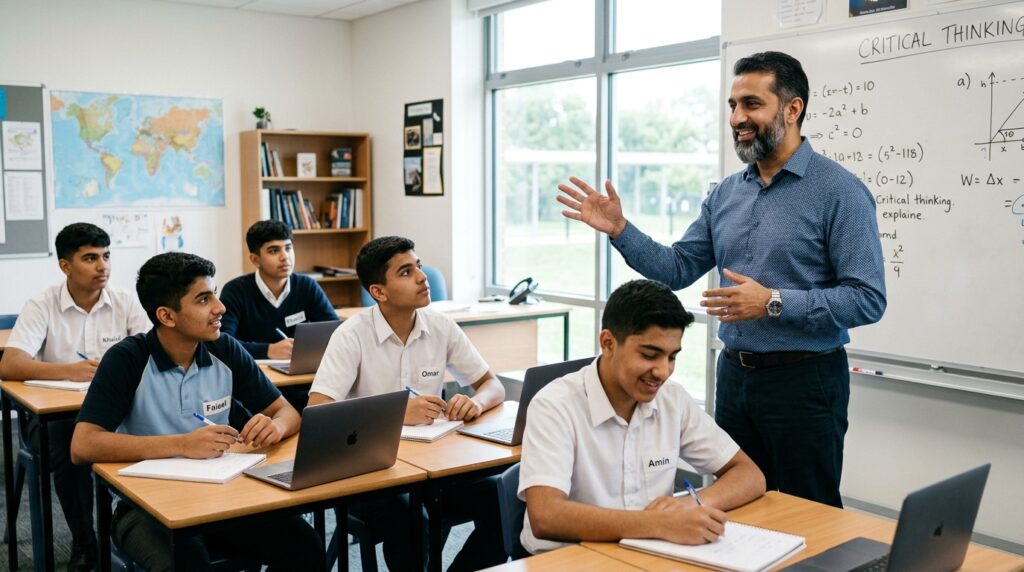
Status of Teachers in Islam: Their Role, Rights, and Lasting Impact
Teachers do far more than explain lessons, assign tasks, or prepare students for examinations. A teacher can influence the way a student thinks, behaves, approaches challenges, and understands responsibility. Sometimes, a lesson or a word of encouragement remains with a student long after the classroom itself has been forgotten.
The status of teachers in Islam reflects this profound responsibility. Islam honors beneficial knowledge in Islam and recognizes the people who sincerely teach it as important contributors to the growth of individuals and communities.
A teacher is not simply a source of information. A teacher can be a mentor, a role model, a guide, and a builder of future generations. At the same time, students have responsibilities toward those who teach them, including respect, good manners, attention, and appreciation.
Understanding the status of teachers in Islam, the rights of teachers in Islam, and the responsibilities teachers themselves carry helps create an educational relationship built on knowledge, character, and mutual respect.
Why Is the Status of Teachers in Islam So Important?
To understand the status of teachers in Islam, we first need to understand the position of knowledge itself.
The first Quranic revelation began with:
﴿اقْرَأْ بِاسْمِ رَبِّكَ الَّذِي خَلَقَ﴾
[Surah Al-‘Alaq: 1]
“Read in the name of your Lord who created.”
Islam places knowledge at the foundation of faith, understanding, and personal development.
Allah also says:
﴿يَرْفَعِ اللَّهُ الَّذِينَ آمَنُوا مِنكُمْ وَالَّذِينَ أُوتُوا الْعِلْمَ دَرَجَاتٍ﴾
[Surah Al-Mujadilah: 11]
Knowledge helps people understand their Creator, recognize what is beneficial and harmful, develop useful skills, and contribute to society. Teachers play an essential role in this process.
They carry knowledge from one generation to another and help transform information into understanding. Their influence may extend far beyond a classroom because the student they teach today may become a parent, professional, leader, or teacher tomorrow.
For a broader understanding of the Islamic value of learning, read The Importance of Seeking Knowledge in Islam.
The Role of Teachers in Islam Goes Beyond Information
The role of teachers in Islam is not limited to completing a curriculum.
Teaching at its best involves educating the mind while also encouraging good character, responsibility, discipline, and beneficial action.
A teacher may:
- Explain difficult ideas.
- Correct misunderstandings.
- Encourage a struggling student.
- Develop confidence.
- Teach discipline and responsibility.
- Model good manners.
- Help students recognize their abilities.
- Inspire students to use knowledge beneficially.
This is why the importance of teachers in Islam cannot be measured only by the amount of information they deliver.
A student may forget a particular lesson but remember the teacher who taught patience, fairness, honesty, or perseverance through personal example.
The Prophet Muhammad ﷺ said:
“Whoever guides to something good will have a reward like the one who does it.”
(Sahih Muslim)
A teacher who guides students toward something beneficial may therefore create an impact that continues beyond the original lesson.
Teachers Help Build the Future
Education is one of the foundations through which future generations are prepared.
The students sitting in classrooms today may later become doctors who care for patients, engineers who build communities, parents who raise families, scholars who teach others, or professionals who serve society in countless ways. Behind many of them will be teachers who contributed to their development.
This gives the status of teachers in Islam a wider social dimension. Teaching is not only about the present lesson; it can be part of preparing people for future responsibilities.
A teacher may never see the full effect of their work. A small piece of guidance given today may influence a decision years later. Knowledge taught to one student may eventually benefit hundreds of others. This long-term influence is one reason teaching should be viewed as a mission and an amanah, not merely a profession.
A Teacher Is Also a Role Model
Students learn from what teachers say, but they also learn from what teachers do.
A teacher who speaks about honesty but acts dishonestly sends two conflicting lessons. A teacher who teaches respect while humiliating students weakens the very value being taught. For this reason, an important part of the role of teachers in Islam is leading through example.
Teachers should strive to demonstrate the qualities they hope to develop in their students:
- Honesty.
- Patience.
- Fairness.
- Mercy.
- Responsibility.
- Humility.
- Respect.
- Self-discipline.
The teacher’s behavior may sometimes communicate more powerfully than a formal lesson. This principle is especially important when teaching children, who often learn by observing adults. Our guide to Raising Children in Islam also discusses how example helps shape children’s faith, manners, and responsibility.
Kindness and Patience Are Essential Qualities of a Teacher
Teaching requires patience. Students have different abilities, personalities, backgrounds, and learning speeds. Some understand immediately, while others need repetition. Some ask many questions, while others hesitate to speak because they fear making mistakes.
A good teacher recognizes these differences.
The Prophet Muhammad ﷺ said:
“Gentleness is not found in anything except that it beautifies it, and it is not removed from anything except that it makes it defective.”
(Sahih Muslim)
Gentleness does not mean abandoning standards or ignoring mistakes. A teacher can maintain discipline while correcting students respectfully. Effective teachers know when to explain again, when to encourage, when to correct, and when a student simply needs patience.
The importance of teachers in Islam therefore includes not only what they know but also how they communicate that knowledge.
Justice Between Students Is Part of the Teaching Trust
Teachers hold a position of authority, and authority comes with responsibility. One of those responsibilities is fairness.
A teacher should avoid allowing personal preferences to influence how students are treated. Academic ability, personality, background, or personal affection should not determine whether a student receives respect and attention.
Fairness can appear in simple classroom practices:
- Applying rules consistently.
- Listening to different sides before judging a conflict.
- Giving students reasonable opportunities to participate.
- Evaluating work according to appropriate standards.
- Avoiding humiliation or favoritism.
- Correcting mistakes without attacking a student personally.
Justice builds trust. When students believe that a teacher is fair, they are more likely to feel safe asking questions, admitting mistakes, and participating in learning.
What Are the Rights of Teachers in Islam?
The rights of teachers in Islam are closely connected to the respect Islam gives to knowledge. Students benefit when they understand that good manners toward teachers are part of the learning process itself.
Respect does not mean believing that teachers never make mistakes. Teachers are human beings and may be mistaken. Rather, respecting teachers in Islam means interacting with them with appropriate manners and recognizing the effort and responsibility involved in teaching.
Students can fulfill the rights of teachers in Islam by:
- Listening attentively during lessons.
- Speaking respectfully.
- Avoiding unnecessary interruptions.
- Asking questions politely.
- Completing responsibilities seriously.
- Accepting correction with maturity.
- Avoiding mockery and insulting comments.
- Respecting the teacher’s time.
- Showing gratitude for beneficial teaching.
- Disagreeing respectfully when necessary.
These habits also help the student. Respect creates an environment where knowledge can be received with greater attention and humility.
Respecting Teachers in Islam Is Part of Respecting Knowledge
One of the strongest principles behind respecting teachers in Islam is that honoring the teacher reflects appreciation for the knowledge being taught.
A student who constantly interrupts, mocks, ignores instructions, or deliberately disrupts lessons does not only affect the teacher; such behavior can prevent classmates from benefiting as well.
Students should learn that classroom manners include:
- Listening Before Responding: Give the teacher an opportunity to finish explaining before speaking.
- Asking with Good Manners: Questions are an important part of learning, but they should be asked respectfully.
- Accepting Correction: Being corrected is not necessarily an insult; it is often part of learning.
- Avoiding Arrogance: A student should not allow achievement or knowledge to create contempt for teachers or classmates.
- Showing Gratitude: A sincere word of thanks can acknowledge the time and effort a teacher has invested.
These habits help students develop humility, discipline, and respect—qualities that extend far beyond the classroom.
Respect Does Not Mean Blind Agreement
Understanding the rights of teachers in Islam should not be confused with believing that teachers are beyond correction. Teachers can make mistakes.
Students may encounter an inaccurate statement, unfair decision, or situation requiring clarification. Islamic manners do not require students to abandon critical thinking or remain silent about genuine concerns. The key is how disagreement is handled.
A student can:
- Ask for clarification politely.
- Avoid public humiliation when a private conversation is more appropriate.
- Present evidence respectfully.
- Seek help from parents or school administration when necessary.
- Separate disagreement with an idea from disrespect toward a person.
Respect and thoughtful questioning can exist together. In fact, a healthy educational environment allows questions while preserving good manners.
The Special Responsibility of Quran Teachers
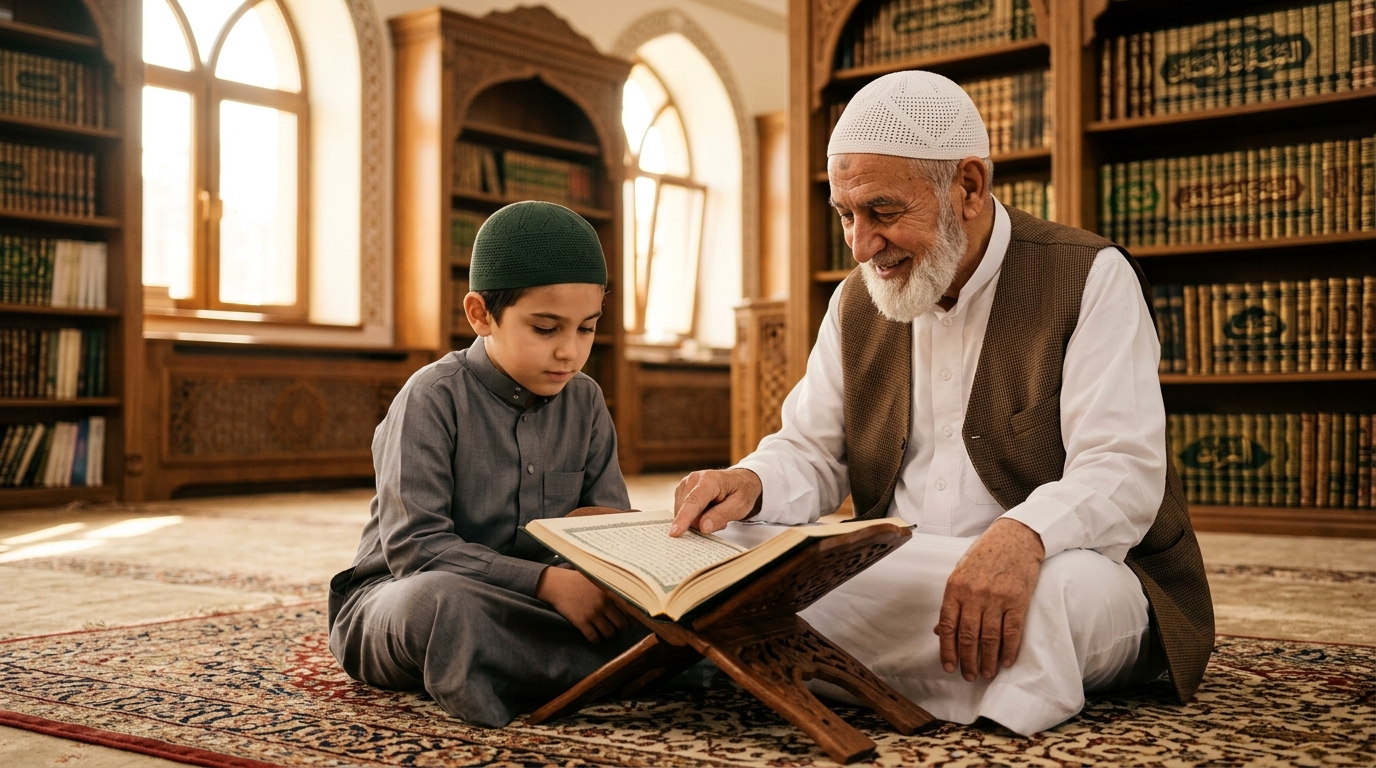
The status of teachers in Islam becomes especially significant when the subject being taught is the Quran.
A Quran teacher does more than teach letters, pronunciation, Tajweed rules, or memorization. The teacher is helping students develop a relationship with the Book of Allah.
The Prophet Muhammad ﷺ said:
“The best among you are those who learn the Quran and teach it.”
(Sahih al-Bukhari)
This teaching gives Quran education a particularly honored place. A qualified Quran teacher should therefore combine knowledge with patience, sincerity, good character, and an ability to guide students according to their individual needs.
Our article Online Quran Teacher: Learn Quran Online with Expert Guidance explains in greater detail how Quran teachers can influence recitation, consistency, confidence, and Islamic character.
Teachers Can Shape Character as Well as Knowledge
Education is incomplete when knowledge fills the mind but produces no positive change in behavior. A knowledgeable student should ideally become more responsible, disciplined, respectful, and useful to others.
Teachers can encourage this connection. A teacher may reinforce honesty by refusing to normalize cheating. A teacher may cultivate responsibility by expecting students to complete commitments. A teacher may teach respect by demonstrating it consistently.
In this way, education becomes more than the transfer of facts; it becomes character formation. This is an important dimension of the role of teachers in Islam: helping students understand that knowledge should produce beneficial action.
Parents Should Teach Children to Respect Their Teachers
The responsibility for respecting teachers in Islam does not begin at the classroom door. Parents have an important role in shaping how children view teachers and education.
If parents constantly mock teachers, undermine them in front of children, or treat education as unimportant, children may absorb the same attitudes.
Parents can instead teach children to:
- Speak respectfully about teachers.
- Listen during lessons.
- Complete school responsibilities.
- Ask questions appropriately.
- Appreciate the effort involved in teaching.
- Discuss problems without insults.
- Accept reasonable corrections.
At the same time, parents should listen seriously when a child reports a genuine problem. Teaching respect should never mean dismissing legitimate concerns. Islamic parenting seeks a balanced approach: respect for teachers alongside care for the child’s well-being.
For more on developing faith, responsibility, and respectful behavior in children, see Raising Children with Purpose: An Islamic Parenting Guide.
Students Also Have a Role in Successful Education
Even an excellent teacher cannot learn on behalf of the student. Education is a shared process.
Allah says:
﴿يَرْفَعِ اللَّهُ الَّذِينَ آمَنُوا مِنكُمْ وَالَّذِينَ أُوتُوا الْعِلْمَ دَرَجَاتٍ﴾
[Surah Al-Mujadilah: 11]
A student should value time, work consistently, ask for help when necessary, and allow knowledge to improve character.
Useful student habits include:
- Attending lessons consistently.
- Preparing before class.
- Reviewing what was learned.
- Asking meaningful questions.
- Protecting study time.
- Choosing friends who encourage progress.
- Showing good manners toward teachers and classmates.
- Applying useful knowledge in daily life.
A teacher may open the door to knowledge, but the student must make the effort to walk through it. For practical guidance on starting the academic year with faith and discipline, read our guide on Islamic Advice for Students.
Teachers in the Digital Age
Education has changed dramatically. Students can now learn through virtual classrooms, recorded lessons, educational platforms, digital books, and one-to-one online sessions. A teacher and student may live thousands of miles apart and still meet regularly for lessons.
Technology changes the classroom, but it does not remove the importance of teachers in Islam. Students still need people who can explain difficult concepts, correct mistakes, distinguish reliable information from misinformation, adapt lessons to individual needs, answer questions, encourage consistency, and provide thoughtful feedback.
In fact, the enormous amount of information available online may make qualified guidance even more valuable. Access to information is not the same as understanding. The role of teachers in Islam remains vital because education requires more than finding information—it requires guidance in understanding and using knowledge correctly.
How Can Society Honor the Role of Teachers?
Recognizing the status of teachers in Islam should influence how communities treat education. Teachers help prepare future generations, and their contribution should be acknowledged by students, parents, educational institutions, and society.
This can include:
- Speaking respectfully about the teaching profession.
- Supporting teachers in fulfilling their educational responsibilities.
- Encouraging qualified people to teach.
- Providing appropriate training and resources.
- Building cooperation between families and teachers.
- Recognizing excellent teaching and sincere effort.
- Avoiding unrealistic expectations that place every educational problem on teachers alone.
Education succeeds best when teachers, students, parents, and institutions understand that each has responsibilities. The teacher is central to this process, but education is a shared mission.
What Makes a Good Teacher in Islam?
The importance of teachers in Islam is closely connected to the qualities they bring to their mission. An effective teacher should strive for:
Sincerity: Teaching should be approached as an amanah and an opportunity to benefit others.
Knowledge: Teachers should continue learning and ensure that what they teach is accurate.
Good Character: Students observe behavior as closely as they listen to words.
Justice: Every student deserves fair and dignified treatment.
Patience: Learning takes time, and students progress differently.
Gentleness: Correction can be firm without becoming humiliating.
Responsibility: Words can shape students, so teachers should communicate thoughtfully.
Positive Example: A teacher’s actions should support the values taught in lessons.
Conclusion
The status of teachers in Islam reflects the importance Islam places on knowledge, education, character, and the development of future generations.
Teachers do more than transfer information. They can awaken ambition, correct misunderstanding, encourage good character, and help students discover abilities that may shape the rest of their lives.
For this reason, the rights of teachers in Islam include being treated with respect, good manners, attention, and appreciation. Respecting teachers in Islam is closely connected to respecting the learning process itself.
At the same time, teachers carry a serious amanah. Their position calls for knowledge, patience, justice, gentleness, sincerity, and good examples.
May Allah reward sincere teachers, bless their knowledge and efforts, guide students to honor and benefit from their teachers, and make education a source of lasting good. Ameen.
Reflection Question
Which teacher has had the greatest positive influence on your life, and what lesson from that teacher do you still carry with you today?