
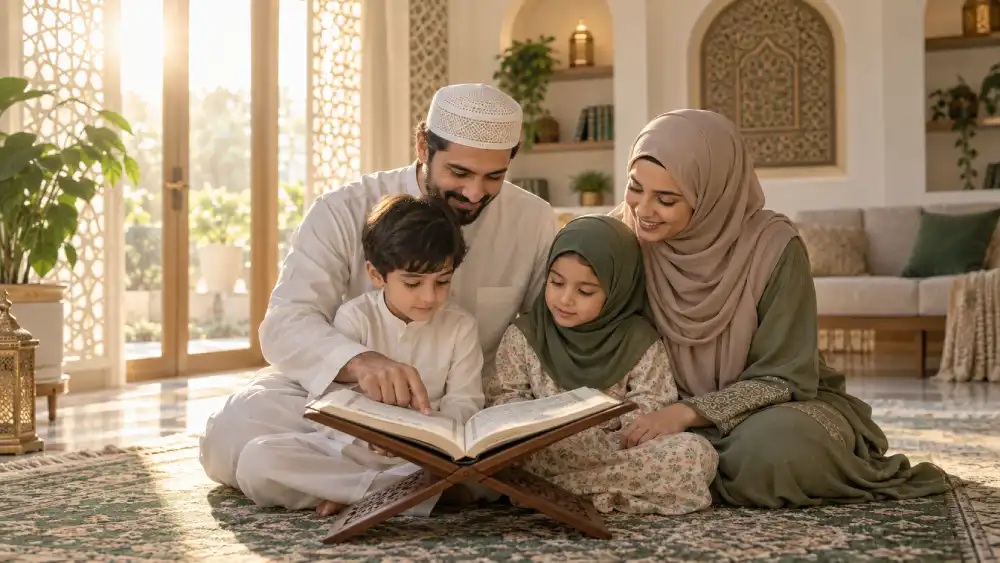
Raising Children with Purpose: An Islamic Parenting Guide
Raising children is one of the greatest responsibilities Allah entrusts to parents. A child needs food, safety, education, and affection, but Islamic parenting goes further. It seeks to nurture faith, develop good character, teach responsibility, and prepare a young person to live as a sincere servant of Allah.
The discussion surrounding parents’ importance in Islam is therefore not limited to the respect children owe their mother and father. It also includes the essential role parents play in shaping a child’s beliefs, habits, emotional well-being, and relationship with Allah.
Purposeful parenting does not mean expecting perfection or controlling every detail of a child’s life. It means raising children with clear values, compassionate guidance, consistent boundaries, and a home environment in which Islam is lived with love and sincerity.
What Is the Importance of Parents in Islam?
Islam gives parents an honored position and commands children to treat them with respect and kindness. Allah says:
﴿وَقَضَىٰ رَبُّكَ أَلَّا تَعْبُدُوا إِلَّا إِيَّاهُ وَبِالْوَالِدَيْنِ إِحْسَانًا﴾
[سورة الإسراء: 23]
At the same time, parents carry a serious responsibility toward their children. Parenthood is an amanah, or trust, and parents will be accountable for the care, guidance, and example they provide.
The Prophet Muhammad ﷺ said:
“Each of you is a shepherd, and each of you is responsible for his flock.”
(Sahih al-Bukhari and Sahih Muslim)
This hadith explains the role of parents in Islam clearly. Parents are not merely providers of material needs. They are guardians, teachers, role models, and sources of emotional security. Their responsibility includes protecting their children, teaching them what is right, correcting them with wisdom, and helping them grow into responsible Muslims.
What Does Raising Children with Purpose Mean?
Raising children with purpose means knowing what qualities you hope to nurture and making daily choices that support those goals. In Islam, the ultimate aim is not simply to raise a successful student or financially independent adult. It is to raise a person who knows Allah, worships Him, treats others well, and uses their abilities in beneficial ways.
Purposeful Muslim parenting seeks to develop:
- Sound faith and love for Allah.
- A meaningful relationship with the Quran.
- Regular worship and personal responsibility.
- Honesty, mercy, patience, and humility.
- Respect for parents, relatives, neighbors, and teachers.
- Confidence without arrogance.
- Discipline without harshness.
- The ability to make responsible choices.
- A desire to benefit others.
These goals do not develop through one conversation. They are formed gradually through repeated experiences, consistent routines, sincere dua, and the example children observe at home.
Parental Responsibility in Islam
The Quran places responsibility for the spiritual well-being of the family upon believers. Allah says:
﴿يَا أَيُّهَا الَّذِينَ آمَنُوا قُوا أَنْفُسَكُمْ وَأَهْلِيكُمْ نَارًا﴾
[سورة التحريم: 6]
Protection here includes teaching faith, encouraging obedience to Allah, warning against harmful behavior, and creating a home that supports righteousness.
Allah also says:
﴿وَأْمُرْ أَهْلَكَ بِالصَّلَاةِ وَاصْطَبِرْ عَلَيْهَا﴾
[سورة طه: 132]
The command to remain steadfast is especially important. Islamic upbringing for children requires patience and repetition. Parents may need to remind, explain, encourage, and correct many times. The goal is not to produce temporary obedience through fear but to help worship become part of the child’s identity and daily life.
Understanding parents’ importance in Islam means recognizing that many of a child’s earliest ideas about faith, relationships, honesty, and responsibility are formed at home.
Parents Are Their Children’s First Role Models
Children learn from what parents repeatedly do more than from what they occasionally say. A parent who speaks about prayer but regularly delays it communicates a different lesson through behavior. A parent who demands honesty while breaking promises teaches that truthfulness is conditional.
Positive role modeling includes:
- Praying consistently and calmly.
- Speaking truthfully, even when the truth is uncomfortable.
- Apologizing after making a mistake.
- Treating one’s spouse and relatives respectfully.
- Controlling anger and avoiding insults.
- Reading the Quran regularly.
- Showing gratitude for Allah’s blessings.
- Keeping promises made to children.
- Helping relatives, neighbors, and people in need.
This does not mean parents must be perfect. In fact, allowing children to see a parent admit a mistake and seek forgiveness can teach humility, accountability, and repentance more powerfully than pretending never to fail.
Positive Parenting in the Muslim Home
Positive parenting in the Muslim home combines warmth and mercy with clear expectations. It does not mean allowing every behavior or avoiding correction. Rather, it means guiding children in a way that protects their dignity and helps them understand the reason behind family values and boundaries.
The Prophet ﷺ taught and corrected people with gentleness. He said:
“Allah is gentle and loves gentleness in all matters.”
(Sahih al-Bukhari and Sahih Muslim)
A positive Muslim home is one where children feel loved enough to ask questions, safe enough to admit mistakes, and guided enough to know that actions have consequences.
Connect Before You Correct
When a child is upset, afraid, or overwhelmed, immediate lecturing may not be effective. Listen first, understand what happened, and then guide the child toward a better response.
Connection does not cancel accountability. It makes correction easier to understand and more likely to produce lasting change.
Correct the Behavior, Not the Child’s Identity
There is a difference between saying, “Lying is wrong,” and saying, “You are a liar.” The first identifies a behavior that can change. The second turns a mistake into a damaging label.
Parents should make it clear that wrongdoing is unacceptable while reminding the child that repentance, repair, and improvement are always possible.
Praise Effort and Good Choices
Children need to know which behaviors should be repeated. Specific praise such as, “You told the truth even though it was difficult,” is more useful than general praise because it connects encouragement to a moral choice.
Use Consequences with Wisdom
Consequences should be proportionate, understandable, and related to the behavior whenever possible. The purpose is to teach responsibility, not to frighten, humiliate, or release a parent’s anger.
This balanced approach is one of the most practical Islamic parenting principles: mercy gives children emotional security, while consistent boundaries teach self-control.
Teaching Children Faith Without Making It Feel Like a Burden
Faith should be present naturally throughout family life. Parents can speak about Allah’s mercy when enjoying a blessing, make dua during difficulty, mention the wisdom behind worship, and connect everyday experiences to gratitude and trust in Allah.
Helpful practices include:
- Praying together whenever possible.
- Keeping a regular family Quran time, even if it is brief.
- Teaching short duas and explaining their meanings.
- Sharing age-appropriate stories of the prophets.
- Discussing Allah’s names and attributes in simple language.
- Encouraging questions without mocking or shaming the child.
- Celebrating progress in worship without turning it into competition.
Children are born upon the fitrah. The Prophet ﷺ said:
“Every child is born upon natural disposition.”
(Sahih al-Bukhari and Sahih Muslim)
Parents do not create the fitrah, but they influence how it is protected and nurtured. A home filled with sincere worship, affection, and thoughtful teaching helps children experience Islam as guidance and mercy.
For more practical ideas, read How to Raise Children Who Love the Quran, which explores how parents can build a lasting connection between children and the Book of Allah.
Building a Child’s Relationship with the Quran
The Quran should not appear in a child’s life only as a lesson to complete or a passage to memorize. Children need to see that the Quran is guidance for real emotions, choices, relationships, and challenges.
Parents can support this relationship by:
- Reciting regularly in front of their children.
- Listening to the child without reacting harshly to every mistake.
- Choosing a realistic memorization and revision schedule.
- Explaining the meanings of short surahs.
- Connecting verses to daily experiences.
- Working with a patient and qualified Quran teacher.
- Celebrating consistency rather than speed alone.
Some children memorize quickly, while others need more time and repetition. Comparison can make Quran learning a source of anxiety. Purposeful parenting focuses on steady progress and sincerity rather than using another child’s achievements as the standard.
Our broader guide to raising children in Islam discusses how parents can nurture faith, character, and responsibility through everyday family life.
Developing Good Character and Emotional Strength
An effective Islamic parenting guide must address both outward behavior and inner character. Children need help naming emotions, managing frustration, showing empathy, and taking responsibility after mistakes.
Parents can nurture character by creating opportunities to practice it:
- Give children suitable household responsibilities.
- Encourage them to share and serve others.
- Teach them to apologize and repair harm.
- Let them make age-appropriate choices.
- Discuss how words affect other people.
- Help them wait, work, and complete difficult tasks.
- Praise truthfulness and courage more than appearance or achievement.
Honesty deserves special attention because children may lie when they fear an extreme reaction. Parents should correct dishonesty while making it safe for a child to confess and tell the truth.
Our article The Importance of Honesty in Islam explains how truthfulness builds faith, trust, and strong character in both individuals and families.
Discipline Without Harshness or Neglect
Two extremes can weaken a child’s upbringing. Excessive harshness may produce fear, secrecy, resentment, or obedience that disappears when the parent is absent. Excessive permissiveness may leave the child without self-control, respect for limits, or readiness for responsibility.
Islamic discipline seeks a balanced path. Parents should establish a small number of clear rules, explain them in age-appropriate language, and respond consistently when those rules are broken.
Before correcting a child, consider:
- Did the child understand the rule?
- Is the expectation suitable for their age?
- Was the behavior intentional, careless, or caused by an unmet need?
- Am I correcting to teach or reacting from anger?
- Is the consequence proportionate and connected to the behavior?
- Have I noticed and encouraged the child’s improvement?
Parents should never make humiliation, insults, threats, or comparison the foundation of discipline. A child’s dignity remains important even when correction is necessary.
Fairness Between Children
Justice within the family protects sibling relationships and helps every child feel secure. The Prophet ﷺ said:
“Fear Allah and be just among your children.”
(Sahih al-Bukhari and Sahih Muslim)
Parents should avoid obvious favoritism in gifts, praise, attention, and treatment. Children notice unfairness quickly, and repeated favoritism can create jealousy that lasts into adulthood.
Fairness does not always require identical treatment. A younger child, a child with an illness, or a child facing a particular difficulty may need different support. Parents should respond to genuine needs without making affection or dignity feel unequal.
This is an important dimension of positive parenting in the Muslim home: every child should feel seen, heard, and valued, even when their needs and personalities differ.
Raising Responsible Children in the Digital Age
Modern parents must guide children through challenges that earlier generations did not face in the same way. Smartphones, social media, games, artificial intelligence, and constant access to content can influence faith, attention, sleep, behavior, and self-image.
Digital parenting requires more than placing a device in a child’s hands and setting occasional restrictions. Parents should:
- Choose age-appropriate content and platforms.
- Set consistent screen-time boundaries.
- Keep devices out of bedrooms when possible.
- Teach children not to share private information.
- Discuss online bullying, harmful content, and misleading information.
- Know whom their children interact with online.
- Provide enjoyable offline alternatives.
- Model healthy technology habits themselves.
Monitoring should be combined with communication. Children are more likely to seek help when they know they can speak honestly without immediate panic or humiliation.
For additional guidance, see How to Use Social Media Responsibly, which explains how Islamic accountability applies to digital behavior.
How Can Parents Create a Purposeful Muslim Home?
A purposeful home does not require complicated programs. It is built through simple practices repeated consistently.
- Establish prayer as the rhythm of family life.
- Set aside a realistic time for Quran recitation and learning.
- Eat together regularly and encourage meaningful conversation.
- Give every child responsibilities suitable for their age.
- Agree on clear family rules and explain the values behind them.
- Create regular opportunities for charity and service.
- Protect time for play, rest, and family connection.
- Review digital habits and content together.
- Speak about mistakes as opportunities to repent and improve.
- Make dua for your children by name.
These habits reflect the practical meaning of parents’ importance in Islam. Parents shape the atmosphere in which children understand faith, experience relationships, and prepare for adult responsibility.
Conclusion
Raising children with purpose is a long journey that requires knowledge, patience, mercy, and consistency. The role of parents in Islam is not to control every outcome but to provide sincere guidance, a strong example, emotional security, and an environment that supports faith and good character.
The principles of positive parenting in the Muslim home help parents combine love with boundaries, connection with correction, and encouragement with accountability. Children need both compassion and direction if they are to grow into confident, responsible Muslims.
Understanding parents’ importance in Islam also reminds mothers and fathers that ordinary moments matter. A calm correction, a promise kept, a prayer offered together, or an honest apology may shape a child’s heart for years to come.
Parents should take the means, continue learning, correct their own mistakes, and ask Allah for help. Guidance belongs to Him, and no sincere effort made for the well-being of a child is ever lost with Allah.
May Allah guide our children, protect their faith, beautify their character, and grant parents wisdom, patience, and sincerity in fulfilling this precious trust. Ameen.
Reflection Question
What is one value you want your child to carry into adulthood, and what daily example can you give them to help that value grow?