
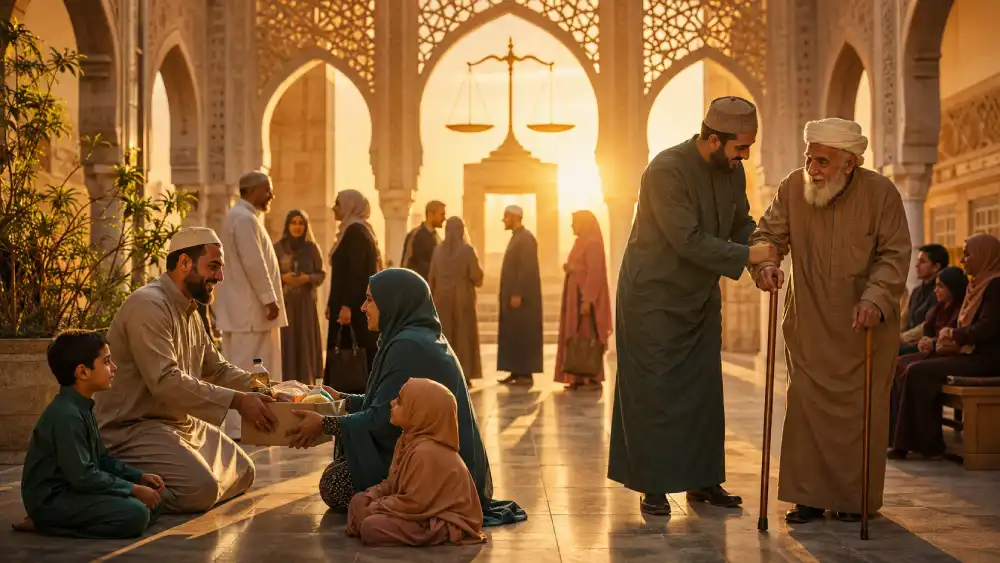
Islamic Social Justice: Justice and Kindness in Islam
Justice is one of the foundations of Islam. It protects people’s rights, strengthens communities, and prevents power, wealth, or personal preference from becoming tools of oppression. Yet Islam does not stop at demanding justice. It also calls believers to ihsan: kindness, excellence, and giving others more than the minimum they are owed.
This balance lies at the heart of Islamic social justice. A just society is not built by laws alone, but by people whose faith shapes the way they treat their families, neighbors, employees, customers, and even those with whom they disagree.
Understanding Islam and social justice therefore begins with a simple truth: worship and social responsibility cannot be separated. A Muslim’s relationship with Allah should be reflected in fairness, mercy, honesty, and care for others.
What Is Islamic Social Justice?
Islamic social justice means establishing fairness, protecting rights, fulfilling responsibilities, and preventing harm according to the guidance of the Quran and Sunnah. It applies to every part of life, including the family, the marketplace, the workplace, leadership, community relations, and support for those in need.
Allah says:
﴿إِنَّ اللَّهَ يَأْمُرُ بِالْعَدْلِ وَالْإِحْسَانِ وَإِيتَاءِ ذِي الْقُرْبَىٰ وَيَنْهَىٰ عَنِ الْفَحْشَاءِ وَالْمُنكَرِ وَالْبَغْيِ يَعِظُكُمْ لَعَلَّكُمْ تَذَكَّرُونَ﴾
[سورة النحل: 90]
This verse brings together several essential principles. Allah commands adl, or justice, which means giving every person their rightful due. He also commands ihsan, which means doing what is beautiful and excellent, even beyond what is strictly required.
From a justice in Islamic perspective, society becomes stronger when rights are protected and compassion is encouraged. Justice prevents oppression, while kindness heals hearts and strengthens human relationships.
Why Are Justice and Kindness Connected in Islam?
Justice and kindness are not competing values. They complete one another.
Justice ensures that people receive what they deserve and are protected from harm. Kindness encourages believers to forgive, assist, and show generosity whenever doing so does not violate another person’s rights.
For example, justice requires an employer to pay workers fairly and on time. Kindness may inspire the employer to support them during hardship. Justice requires parents to avoid unfair favoritism among their children. Kindness moves them to listen patiently, comfort each child, and respond to individual needs with wisdom.
This is what makes Islamic social justice both principled and compassionate. It establishes clear obligations while encouraging believers to rise above selfishness and become sources of mercy in their communities.
Justice Is Required Even When It Is Difficult
Islam does not permit justice only when it is convenient. A believer must remain fair even when personal interests, family ties, or strong emotions make fairness difficult.
Allah says:
﴿يَا أَيُّهَا الَّذِينَ آمَنُوا كُونُوا قَوَّامِينَ بِالْقِسْطِ شُهَدَاءَ لِلَّهِ وَلَوْ عَلَىٰ أَنْفُسِكُمْ أَوِ الْوَالِدَيْنِ وَالْأَقْرَبِينَ﴾
[سورة النساء: 135]
This verse shows that Islam and social justice are rooted in accountability before Allah. Wealth, social status, and family connections must never determine who receives justice.
Allah also commands Muslims not to let hatred lead them away from fairness:
﴿وَلَا يَجْرِمَنَّكُمْ شَنَآنُ قَوْمٍ عَلَىٰ أَلَّا تَعْدِلُوا ۚ اعْدِلُوا هُوَ أَقْرَبُ لِلتَّقْوَىٰ﴾
[سورة المائدة: 8]
A true commitment to justice appears most clearly when a person remains fair toward someone they dislike. This moral discipline protects society from revenge, discrimination, and abuse of power.
Justice Begins Within the Family
The home is one of the first places where Islamic social justice must be practiced. Parents are responsible for treating their children fairly and avoiding favoritism that may create jealousy or resentment.
The Prophet Muhammad ﷺ said:
“Fear Allah and be just among your children.”
(Sahih al-Bukhari and Sahih Muslim)
Fairness does not always mean giving every child exactly the same thing. Children may have different ages, circumstances, and genuine needs. It means making decisions without unjust preference and ensuring that every child feels respected, loved, and protected.
Justice within the family also includes honoring the rights of spouses, caring for elderly relatives, keeping promises, and resolving disagreements without humiliation or cruelty.
Parents teach these values most effectively through their own conduct. Our guide to raising children in Islam explains how daily examples help children develop faith, responsibility, and noble character.

Justice in Business and Everyday Dealings
Justice in Islamic perspective is not limited to courts or governments. It shapes ordinary transactions and daily responsibilities.
A Muslim is expected to:
- Give honest descriptions when buying or selling.
- Use fair weights and measurements.
- Fulfill contracts and promises.
- Pay workers and service providers fairly.
- Return trusts to their owners.
- Avoid fraud, bribery, exploitation, and deception.
- Speak truthfully when giving testimony.
Honesty protects people from financial and emotional harm, making it essential to a just society. To explore this value further, read The Importance of Honesty in Islam, which explains how truthfulness builds trust, character, and faith.
When Muslims practice fairness in their financial dealings, they turn everyday work into an act of worship. They also help create communities in which people feel safe, respected, and able to trust one another.
Caring for Relatives, Neighbors, and People in Need
An essential part of Islamic social justice is ensuring that vulnerable people are not ignored. Islam encourages Muslims to care for relatives, orphans, people experiencing poverty, travelers, neighbors, and anyone facing hardship.
This responsibility is expressed through both obligatory and voluntary acts. Zakat redistributes part of a Muslim’s qualifying wealth to eligible recipients, while sadaqah encourages voluntary generosity throughout the year. Maintaining family ties, feeding others, supporting community needs, and helping people regain independence are also forms of social care.
Such actions are not simply occasional acts of sympathy. They reflect a moral vision in which wealth is a trust from Allah and human dignity must be protected.
Kindness also includes small actions: listening to someone in distress, helping a neighbor, speaking gently, concealing another person’s mistake, or making a difficult task easier. These choices create bonds of mercy that laws alone cannot produce.
Islamic Moral Values That Support Social Justice
Justice does not survive without good character. Several Islamic moral values help believers remain fair and compassionate:
- Taqwa: Awareness of Allah encourages justice even when no one else is watching.
- Honesty: Truthfulness protects rights and prevents deception.
- Mercy: Compassion helps people respond to weakness and hardship with care.
- Trustworthiness: Fulfilling responsibilities prevents betrayal and abuse.
- Patience: Self-control reduces angry and unfair reactions.
- Humility: A humble person does not consider wealth, race, or status a reason to look down on others.
- Generosity: Giving willingly helps meet needs and strengthens the community.
The importance of moral values in Islam is that they transform principles into consistent behavior. A person may speak about justice publicly, but only sincere character makes them practice it privately, especially when fairness comes at a personal cost.
Social Justice and the Building of the Muslim Community
The Prophet ﷺ did not teach justice only as an individual virtue. He established a community in Madinah based on worship, mutual responsibility, protected rights, and cooperation.
The Hijrah made it possible for Muslims to build a society in which faith influenced public as well as private life. The bonds established between the Muhajirun and the Ansar provide a powerful example of solidarity, generosity, and shared responsibility.
Our article Why Was the Hijrah Important? explores how the migration laid the foundations for a community built upon faith, brotherhood, justice, and unity.
This history demonstrates that Islam and social justice involve more than responding to isolated problems. They require communities to create habits and institutions that protect dignity, encourage cooperation, and prevent the strong from exploiting the weak.
Practicing Justice in the Digital World
Muslims are also responsible for justice and kindness online. A careless post can damage a person’s reputation, spread a false accusation, expose private information, or encourage hostility among thousands of people.
Before posting or sharing content, a Muslim should ask:
- Is this information true and verified?
- Am I presenting the situation fairly?
- Could this content harm someone unjustly?
- Does it expose private faults without a valid reason?
- Are my words respectful, even in disagreement?
- Would I be comfortable answering for this before Allah?
Practicing Islamic social justice online means rejecting slander, mockery, racism, bullying, and misinformation. It also means using digital platforms to spread beneficial knowledge, defend people without committing further injustice, and encourage respectful dialogue.
For practical guidance, see How to Use Social Media Responsibly, which discusses accountability and Islamic ethics in digital life.
How Can Muslims Promote Justice and Kindness Today?
Every Muslim can contribute to a more just and compassionate society. Change often begins with small but consistent decisions.
Examine Your Own Conduct
Ask whether personal preferences affect the way you treat relatives, colleagues, employees, or strangers. Correcting one’s own behavior is the first step toward meaningful reform.
Learn Before Judging
Listen to all sides, verify information, and avoid forming conclusions from rumors. Justice requires knowledge, patience, and careful judgment.
Fulfill People’s Rights
Pay debts, keep promises, return trusts, respect agreements, and apologize when you have caused harm. Social justice becomes real through fulfilled responsibilities.
Support Those Facing Hardship
Give charity, volunteer, assist relatives, and support reliable initiatives that protect human dignity. Help should empower people rather than humiliate them.
Speak with Truth and Mercy
Defending what is right does not require cruelty. A believer can reject wrongdoing clearly while maintaining dignity, wisdom, and good manners.
Teach Justice at Home
Children should learn to share, apologize, respect differences, protect others from bullying, and speak up when something is unfair. Parents must model the behavior they hope to see.
These practices show the importance of moral values in Islam: they turn faith into conduct that benefits families, neighborhoods, and entire communities.
Conclusion
Islamic social justice is a comprehensive commitment to fairness, responsibility, mercy, and human dignity. It begins in the heart, appears in personal character, and extends into family life, business, community relationships, and public conduct.
The Quranic command to practice justice and ihsan teaches Muslims not only to avoid oppression but also to become active sources of goodness. From a justice in Islamic perspective, every person has rights that must be protected, and every believer has responsibilities for which they will answer before Allah.
By living according to Islamic moral values, Muslims can build homes and communities marked by honesty, compassion, trust, and mutual care. This is the enduring connection between Islam and social justice: sincere faith should produce conduct that brings benefit, prevents harm, and draws people closer to what Allah loves.
May Allah make us steadfast in justice, beautiful in character, generous in kindness, and courageous in defending the rights of others. Ameen.
Reflection Question
What is one area of your daily life—at home, at work, in your community, or online—where you can practice greater justice and kindness this week?